
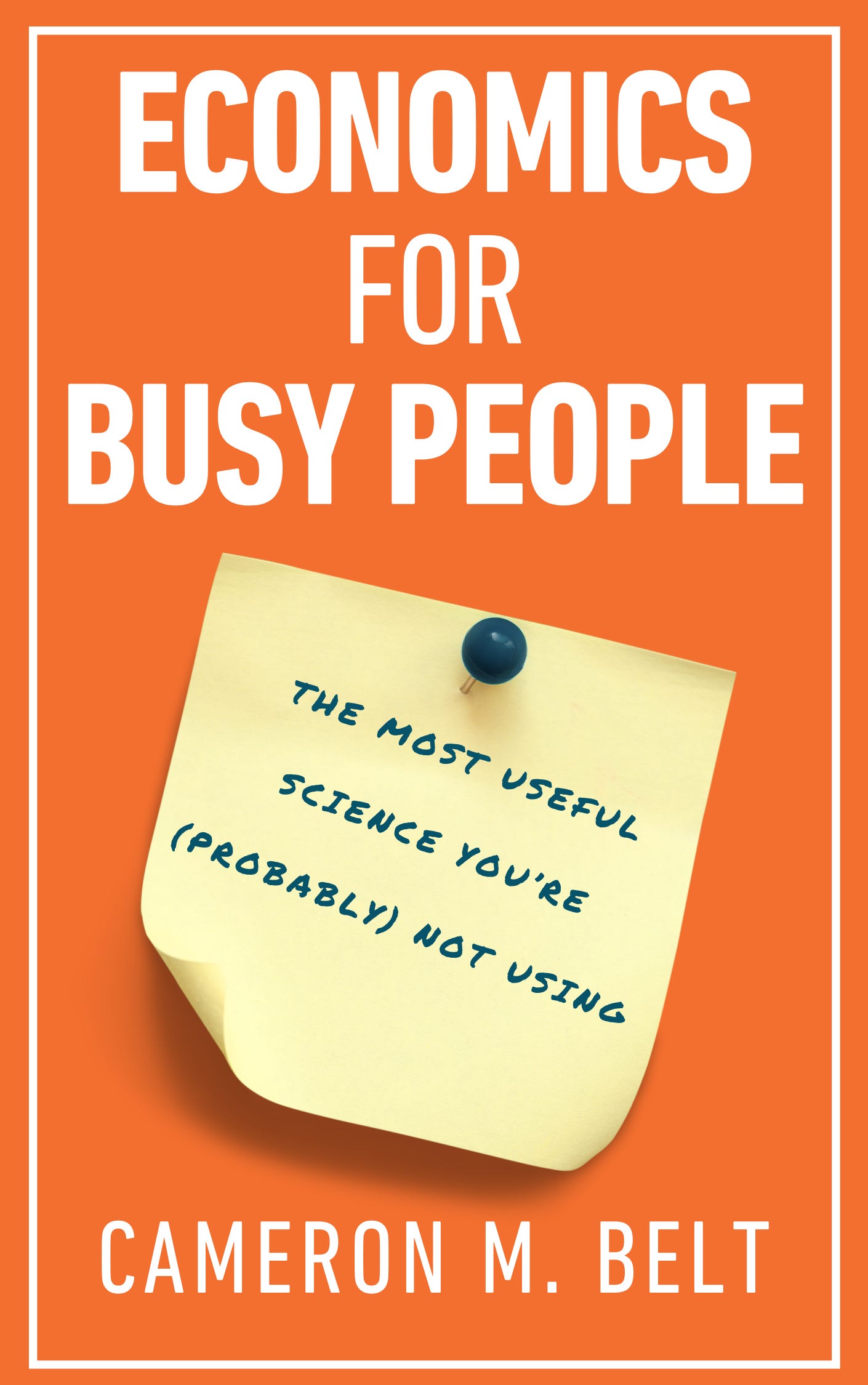
You make economic decisions every day. What to buy. Where to work. How to spend your time. Whether a policy sounds like it will actually help. You’re already living inside the economy — you’re just not using the tools that explain how it works.
That’s not your fault. Economics was taught to most of us as graphs, jargon, and abstract debates that felt disconnected from anything that mattered. The result is that the one science that could sharpen every decision you make — about money, time, risk, opportunity, even how you vote — is the one almost nobody uses.
But the core ideas aren’t complicated. Prices carry information no one had to gather. Every choice has a cost you can’t see. Good intentions don’t guarantee good results. Cooperation between millions of strangers happens every day without anyone being in charge. And the biggest economic mistakes come from stopping at the first answer instead of asking what happens next.
These ideas have been developed by some of the greatest minds in the social sciences. None of them require a degree to understand or a textbook to explain.
Economics is the most useful science most people never use. Economics for Busy People was written to change that in 5 minutes per topic.
Introduction
Part 1: Why Do We Need Economics?
Part 2: Why Do We Act, Choose, And Change?
Short Answer: We Want To Improve Our Lives
Part 3: How Do We Make Decisions In The Real World?
Short Answer: We Must Choose Based On What We Know
Part 4: How Do Millions Of Strangers Cooperate?
Short Answer: We Send Signals With Our Purchases
Part 5: What Makes Cooperation So Valuable?
Short Answer: We Turn Differences Into Opportunities
Part 6: Why Can’t We Just Get Rich Quick?
Short Answer: We Can’t Shortcut Time And Learning
Part 7: Why Can’t We Make The Economy Do What We Want?
Short Answer: We Know More Than Any Planner Can
Part 8: How Can Politics Shape (Or Mis-shape) The Economy?
Short Answer: We Get Unintended Consequences From Good Intentions
Part 9: Can Markets Be Moral?
Short Answer: We Make Markets Moral Through Our Choices
What’s The One Lesson To Take With You?
We Look for Certainty in a World That Can’t Provide It